/2026/09/17/1632659805.jpg)
FOMC
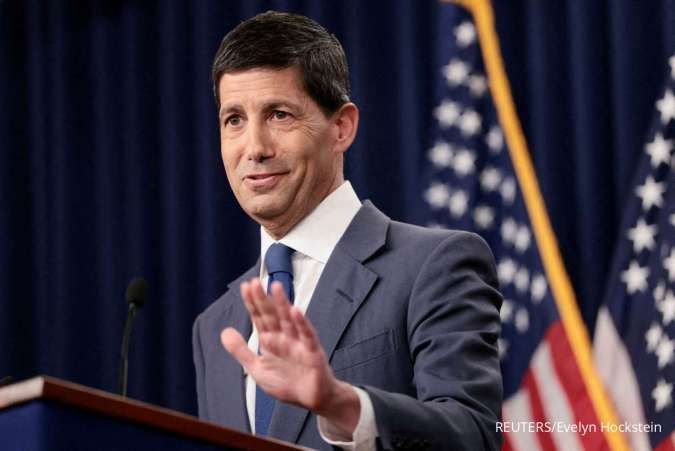
Transcript of Chairman Warsh’s Press Conference Opening Statement
September 16, 2026
Good day.
In the meeting just concluded, the FOMC decided to raise the target range for the federal funds rate by ¼ percentage point to 3¾ to 4 percent, in support of the Federal Reserve’s dual mandate. The Committee is continuing its policy of maintaining ample reserves in the banking system.
As noted in the Policy Statement, released just a short while ago, economic activity is expanding at a solid pace. While uncertainty remains elevated—owing, in part, to geopolitical developments—domestic spending has been resilient. Productivity growth is strong, and capital investment is robust. Job gains have kept pace with the workforce, and the unemployment rate has changed little.
But inflation remains elevated. Today’s policy action will support a timelier return to the Committee’s 2 percent goal. This Committee will deliver price stability.
Read Also: Indonesia’s Antam Gold Price Edges Up to Rp 2.59 Million (16/9), Amid Wide Spread
Now I’ll get into some further detail:
Our decision comes at a time when the American economy appears to be strengthening. New hiring, private-sector earnings, business capital investment—each of these markers has improved in recent months and is pointing in a good direction. Credit flows have been robust, particularly for businesses. And as I said at the policy symposium in Jackson Hole, I would be hard-pressed to describe broad financial conditions as restrictive. This view was widely shared by the Committee. So we removed a dose of accommodation.
Consider the geopolitical landscape of shocks and uncertainty, and you begin to appreciate the resilience of the U.S. economy. Given that resilience, and the potential for even greater performance, an attitude of optimism is exactly what I heard inside the FOMC these last two days.
One basic sign of strength is the state of America’s labor markets. The jobless rate remains low at around 4.1 percent, and both job openings and weekly hours have been increasing. Unemployment claims, on a four-week moving average, are running at levels consistent with full employment. So, the labor side of the Fed’s congressional remit is in good shape.
Yet for more than five years, inflation has been running above target. So, our predominant focus is on the price-stability side of our mandate. The plain fact is that inflation is too high and has been for too long.
Read Also: Federal Reserve Issues FOMC Statement Sept 16, 2026 (2:00 p.m. EST)
This summer’s inflation readings do not tell me that underlying trends have meaningfully improved. Based on the most recent CPI and PPI data, the 12-month change in total PCE prices likely was around 3.6 percent in August. Core PCE and CPI prices are running at about 3.2 percent and 2.4 percent respectively. Too many categories are still posting increases above 3 percent, on both a 6- and 12-month basis.
I noted in Jackson Hole that overall commodity prices also bear watching – and over the inter-meeting period, the prices of many of these key inputs have risen.
Since my first FOMC meeting as Chairman in June, my colleagues and I have been unequivocal in our commitment to price stability, and to our 2 percent PCE inflation objective.
At our July meeting, we all agreed that inflation remained too high, and we expressed our joint readiness to act as circumstances might require. And a good majority of my colleagues and I thought the wiser course then would be to await new information in the inter-meeting period.
Read Also: Indonesia to Launch SBR015 and ST017 as Sovereign Yields Hit 7.16%
Last month in Wyoming, I expressed my commitment to a monetary policy discipline, not to a decision. I defined the standard for action: We must be confident that underlying inflation is moving to our objective, clearly and at sufficient speed.
Today, the FOMC decided that this standard has not been satisfied. The committee’s unanimous vote shows our resolve to achieve price stability on a timelier basis.
We aim to ensure that credit and financial conditions are consistent over time with our mandate, that relative price changes in some sectors of the economy do not broaden, that inflation compensation in market prices stays low, and that inflation expectations remain well-anchored.
This afternoon you also received the Summary of Economic Projections. It reflects the views of my colleagues on the Committee, but—as in June—I have not offered a projection of my own.
But like in June, I said I would faithfully discharge the summary of their projections, so here goes.
Read Also: Indonesia’s IDX Eliminates Rp50 Floor, Sets Stock Minimum Price to Rp1
In the Summary’s median projections, real GDP rises at 2.3 percent this year and 2.4 percent next year. Total PCE inflation runs at 3.7 percent this year and falls to 2.3 percent next year. The unemployment rate holds steady at about 4.1 percent.
The median participant judges that the appropriate federal funds rate to be 4.1 percent at the end of this year, and to remain there next year. Inflation risks are to the upside while labor risks are roughly balanced.
In my meetings these last few weeks—in Jackson Hole, in Asheville at the G-20 meeting, which the U.S. hosted, and at a central bank conference in Basel—it was evident that most advanced economies are facing price pressures.
Their central banks are making their own judgments, consistent with their own remits. Our decision today reflects our best judgment in service to our remit.
The Fed has a role in sustaining the economic progress happening in America right now, and the rising opportunities that come with it.
Those who are least well-off have the most to gain from a durable expansion, a solid labor market, and stable prices.
Read Also: AirAsia Financial Crisis: Malaysia Prepares Rivals to Absorb Market Share
We at the Fed are unwavering in our vital and straightforward purpose: Full employment and price stability, and a thriving American economy that sets the standard for the world.
And with that, I’ll take a few of your questions.