/2026/06/03/303617278.jpg)
MSCI - SINGAPORE. Global index provider MSCI is poised to decide on Tuesday on whether Indonesia retains its emerging markets status or edges towards a downgrade, a move that could accelerate outflows from the world's worst-performing stock market.
The announcement matters because it will steer billions in passive funds that track MSCI indexes and may either lift or darken a market that has turned from darling to deadweight.
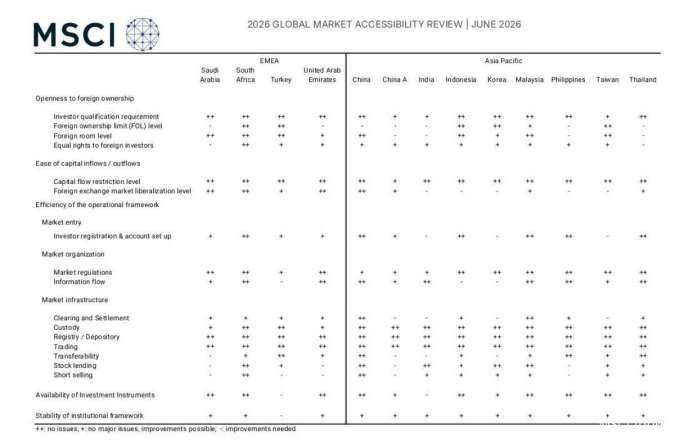
Analysts expect Jakarta's recent reforms, including moves to raise free float levels, to be enough to avert an abrupt demotion. They also took comfort from MSCI's update last week, which contained no broad criticisms.
Still, Tuesday's decision, due after U.S. markets close, may deliver neither clarity nor relief. Investors will be watching just as closely for any sign that MSCI will lift a freeze on adding Indonesian stocks to its indexes.
Read Also: Indonesia Plans to Embed AI in Key Programmes, Including $15 Billion Free-Meal Drive
A downgrade could trigger as much as $13 billion in outflows from Indonesian equities, Goldman Sachs says, at a time when the market cap has already shrunk to $601 billion from above $900 billion in January.
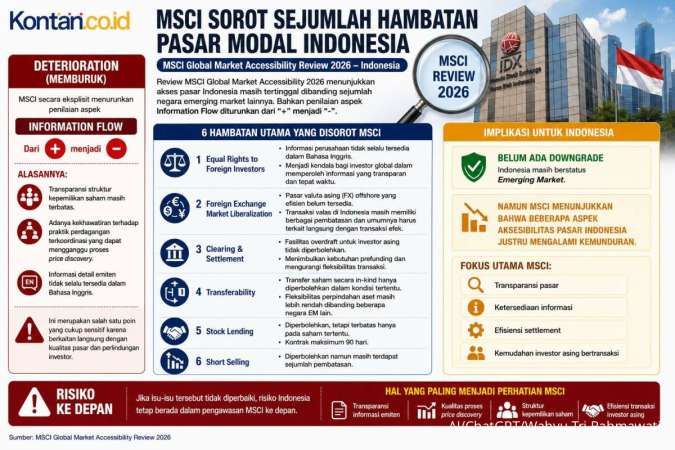
Indonesian assets have been struggling since January, when MSCI froze the country's stocks in its indexes and threatened a potential downgrade to "frontier" status, pointing to opaque ownership, weak free float visibility and unreliable trading data.
At the same time, investor unease has been growing over President Prabowo Subianto's populist agenda, which has contributed to the rupiah sliding to record lows and left the broader investment backdrop looking fragile.
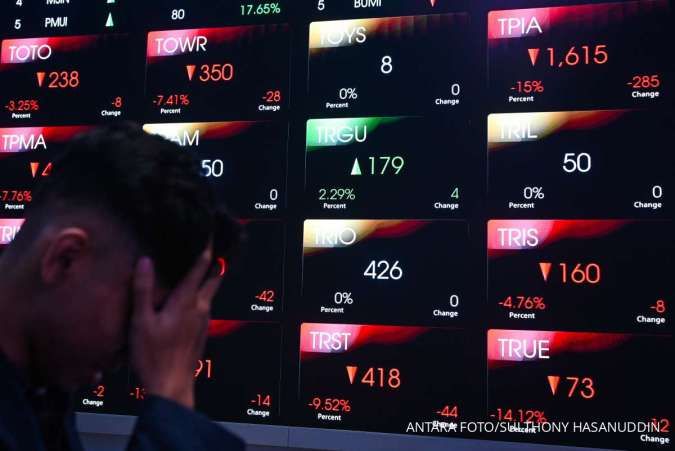
The benchmark Jakarta stock index has dropped 30% this year, making it the worst-performing stock market in the world, with foreign investors net selling $3.89 billion worth Indonesian equities in 2026.
"The potential for a downgrade is very well telegraphed and I'm sure most investors have worked that into their plans and decided, if they're active managers, if they're comfortable with that risk," said Cameron Systermans, head of multi-asset for Asia at Mercer Investments in Tokyo.
Read Also: EMERGING MARKETS-Indonesian Rupiah, Stocks Fall as MSCI Investability Concerns Weigh
"Sometimes these MSCI decisions ... can drag on for years."
MSCI did note last week there are ongoing signs of coordinated trading distorting price formation, as well as inadequate provision of detailed market information in English.
Rating agencies Moody's and Fitch cut their debt rating outlooks for Indonesia to negative earlier this year, citing reduced policymaking credibility.