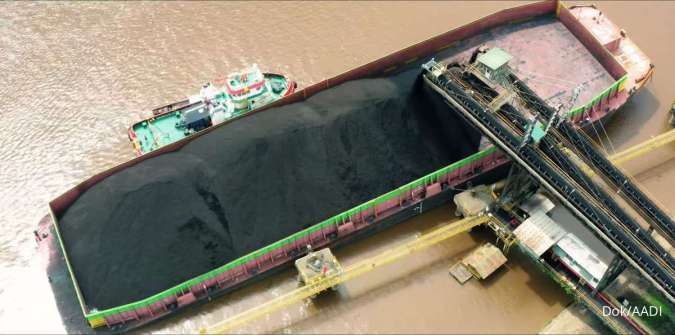
COAL - JAKARTA. Indonesia's coal miners will no longer be able to meet domestic sales obligations by supplying coal to off-grid power plants, a government official said on Thursday, in a move designed to alleviate on-grid power shortages.
Indonesia is the world's top exporter of thermal coal and most of its electricity is powered by coal. There have been reports of prolonged power outages in various parts of the country in recent months.
The move is expected to improve coal supply to the on-grid power sector, which has been struggling with outages, said Energy and Mineral Resources Ministry official Tri Winarno. He did not say when the new policy would be implemented.
Under Indonesia's so-called "domestic market obligation" (DMO) scheme, coal miners are required to sell at least 25% of their output to domestic buyers at capped prices.
The price of DMO coal sold to state electricity utility PLN and other independent power producers is set at a maximum of $70 per metric ton and $90 for other select industries like cement, fertilisers and textiles.
Asked the reason for the move, Winarno said it was because miners received "normal price" for the coal.
Read Also: Bank Indonesia Governor Destry Responds to Hashim’s Warning on Rupiah IDR 22,000
Off-grid power plants, or "captive power plants", are typically built by large industrial facilities to meet their own electricity needs. Indonesia's massive nickel smelting sector is among the biggest users of them.
With no cap, miners can earn more money selling their coal to captive plants while still complying with DMO.
Indonesia's coal miner association APBI said the plan needs further assessment and explanation from the government.
"The fundamental principle of the DMO is to ensure the fulfillment of domestic coal needs. We certainly hope there will be further clarification before such a policy is implemented," said APBI executive director Gita Mahyarani.
The price ceiling for the power sector has remained unchanged since 2018, even though global coal prices have risen amid supply constraints in Indonesia and China.
"The widening gap between market prices and the prices at which coal is sold to PLN a disparity that has grown year after year makes meeting the DMO the least financially attractive option for coal companies," non-governmental organisation Trend Asia said in a report this month.
Read Also: Cash is King, as Investors Draw New Battle Lines in AI Spending Boom