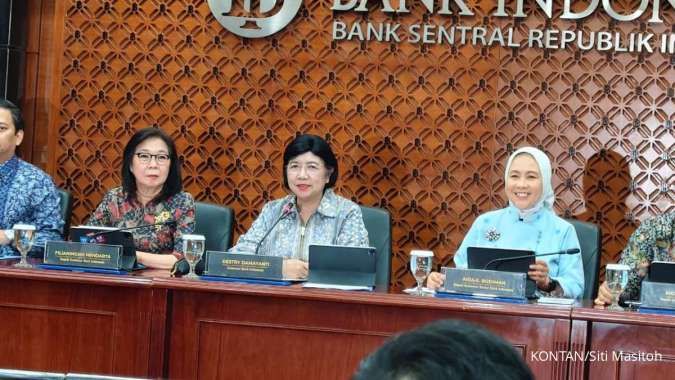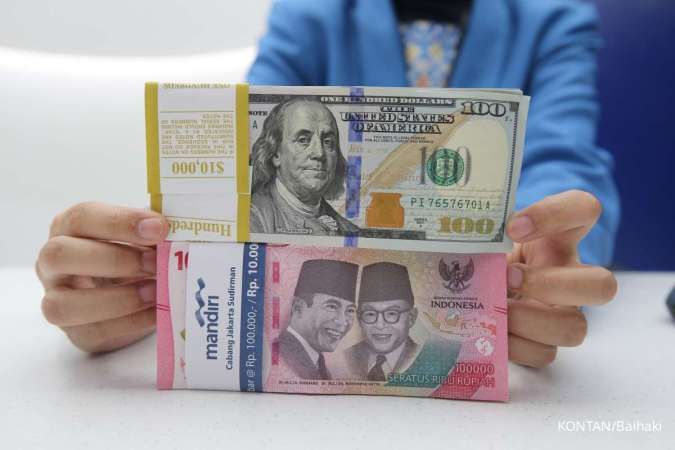
RUPIAH - Bank Indonesia (BI) Governor Destry Damayanti has responded to statements by Indonesian Chamber of Commerce and Industry (Kadin) Advisory Council Chairman Hashim Djojohadikusumo, who projected that the rupiah exchange rate could potentially plunge to IDR 20,000 to IDR 22,000 per US dollar (USD) if foreign investor confidence in the domestic financial market declines.
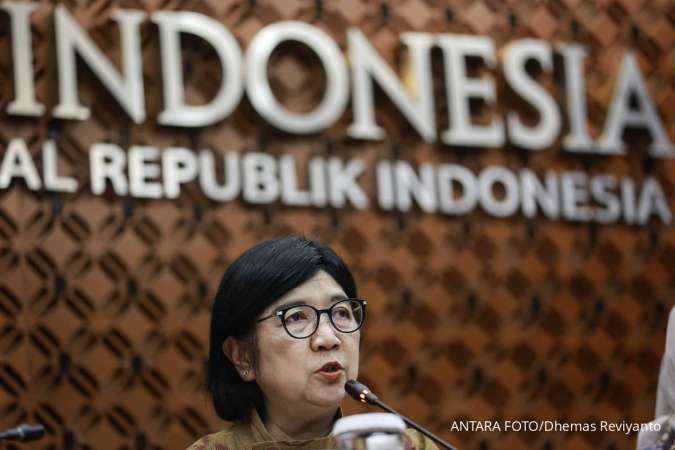
Destry emphasized that BI's primary duty is to maintain the stability of the rupiah. According to her, the rupiah's movement is influenced by various factors, including economic fundamentals, market supply and demand, and investor perception.
"If we look at our economic fundamentals, we are actually in a relatively good condition compared to our peer group," Destry told reporters on Thursday (10/29/2026).
She explained that the rupiah exchange rate movements occurring currently are part of financial market fluctuations. According to her, as a market-driven currency, the rupiah is also affected by supply and demand dynamics as well as market sentiment.
Read Also: MSCI Warning a Short-term Shock, Indonesia Central Bank Chief Reassures Businesses
Destry cited US monetary policy developments as an example of a factor that can influence the rupiah. She noted that positive sentiment in global markets can drive currency appreciation, including for the rupiah.
"If we look at today, appreciation is also happening globally. The US did not raise the Fed's interest rate, and the impact turned out to be immediately positive. So, there are many factors outside our control," she explained.
Nevertheless, Destry assured that BI remains committed to maintaining rupiah stability to foster a conducive economic climate. This stability is deemed crucial so that growth in the real sector can continue and create jobs.
"Our focus is indeed on maintaining stability. So, stability is the first thing we must safeguard to create a conducive economic climate, allowing the real sector economy to grow and create jobs," Destry stated.
Regarding the possibility of raising the benchmark interest rate to respond to pressure on the rupiah, Destry stated that monetary policy decisions will depend on future economic data developments and market conditions. According to Destry, BI has a diverse array of policy instruments to safeguard rupiah stability, meaning the central bank's response is not limited to adjusting the benchmark interest rate.
Read Also: IDX Amends Articles of Association for Demutualization, Approves Special Dividend
"We will see how developments unfold, because we have many policy instruments, not just interest rates," she said.
Destry explained that instruments at BI's disposal include incentives to lower hedging costs, macroprudential policies, and Bank Indonesia Rupiah Securities (SRBI).
Regarding the possibility of raising interest rates to attract foreign capital inflows, Destry stated that BI will weigh incoming market developments.
"We will look at conditions in the market. We will see later," she remarked.
For context, during the Kadin Leadership Meeting (Rapimnas) on Thursday (10/29/2026), Hashim cautioned business leaders to maintain foreign investor confidence amid scrutiny over stock trading practices in Indonesia's capital market. Hashim estimated that capital outflows from the domestic stock market could place significant pressure on the rupiah if investor confidence in Indonesia's financial market drops.
"I have calculated it could reach IDR 20,000–IDR 21,000. Some say IDR 22,000. If that happens, the rupiah could hit IDR 21,000–IDR 22,000 per US dollar. We would have to pay more for our foreign loans," Hashim said.
According to him, a depreciation of the rupiah to that level could increase the burden of servicing Indonesia's foreign debt. Furthermore, such a condition could trigger negative impacts on the national economy.
Read Also: IDX Demutualization Becomes Clearer, Here's What Observers Say