STRATEGI BISNIS BANK - JAKARTA. The global business landscape is undergoing significant changes, driven by geopolitical tensions, supply chain realignments, and protectionist policies adopted by various countries. These developments have prompted global banks to reassess their business strategies and adapt to an increasingly complex operating environment.
Citi is among the banks undertaking such a transformation. As part of its strategic shift, the U.S.-based bank has been divesting its consumer banking businesses in markets outside the United States. In Indonesia, Citi sold its consumer banking business to UOB Indonesia.
Following this transformation, Citi has refocused its operations on four global businesses: Services, Markets, Banking, and Wealth. Citi says this strategy is already delivering results, with improvements in its financial performance.
In the third quarter of 2026, Citi generated US$23.8 billion in revenue, up 8% year-on-year. According to the bank's earnings release, growth was driven by its Services, Markets, Banking, and Wealth businesses, while net interest income increased by 14%.
In Indonesia, Citi recorded revenue of IDR4.11 trillion for the nine months ended September 2026, up from IDR4.03 trillion in the same period last year. However, its year-to-date net profit declined to IDR1.53 trillion from IDR2.29 trillion in September 2025.
Read Also: Danantara Sumberdaya Indonesia to Collect Export Verification Fees from January 1
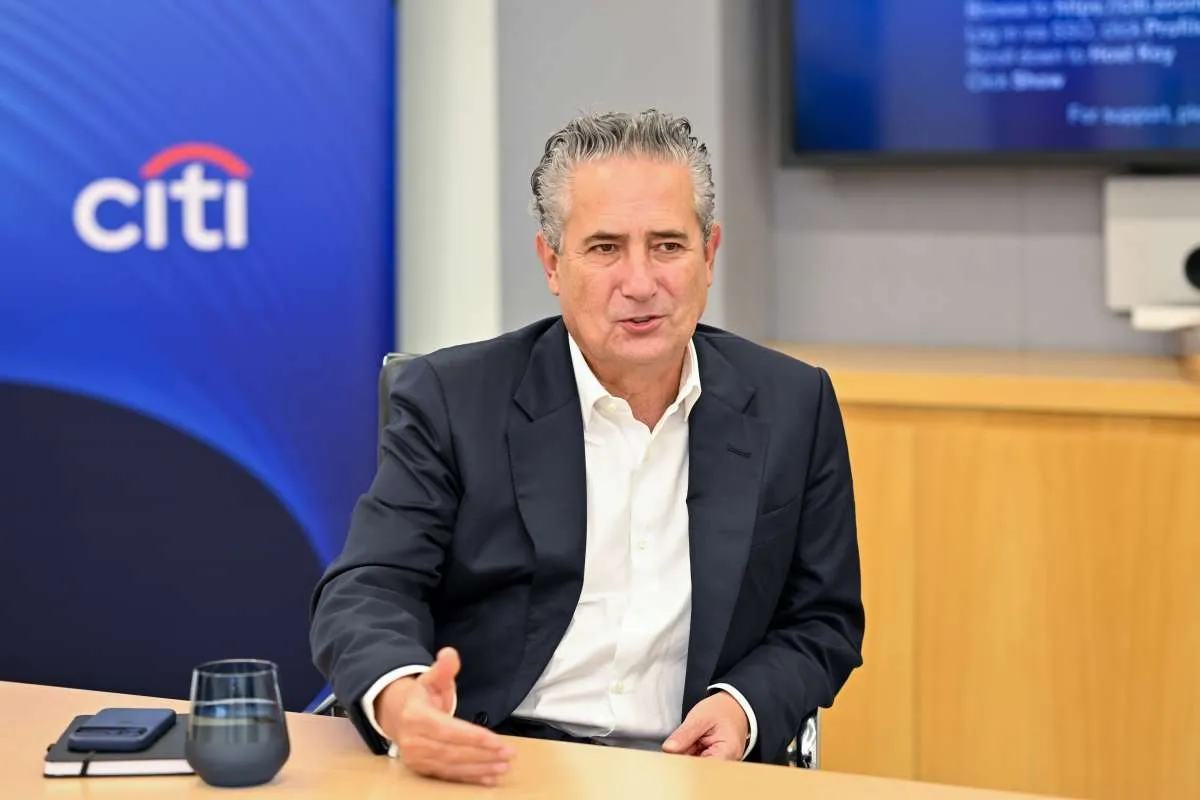
KONTAN conducted a written interview with Ernesto Torres Cantú, Citi's Head of International, who is responsible for the bank's businesses outside North America, including Indonesia. In the interview, Cantú discusses Citi's transformation and global business strategy, how the bank is adapting to changes in the global landscape, and the role Indonesia plays in its future growth plans. Here are the excerpts:
KONTAN: Citi has been transforming its international business, including divesting its consumer banking businesses in markets outside the United States. How has this strategic shift affected the bank's financial performance?
Ernesto: Citi reported our best third-quarter revenue in a decade. Citi today is a more focused institution and that has helped us to simplify a lot.
We defined our global strategy and concentrated on four global businesses - services, markets, banking, and wealth - and the U.S. personal bank. That has paid dividends very well.
We are growing pretty much across every geography, including in Indonesia. Citi Indonesia reported strong financial results for the first half of 2026, driven by sustained growth in lending (8%) and third-party deposits (23%) Year-on-Year. We remain fully committed to supporting our clients' growth through our three interconnected core business lines, Banking, Markets, and Services.
I'm very focused on delivering those businesses to our clients everywhere. The investments made through our transformation have strengthened how Citi operates and created greater capacity to invest in our businesses, technology and future growth.
Read Also: Singapore Will Push For Stronger Action Against Transboundary Haze as ASEAN Chair
Our results reinforce confidence in our strategy and targets we outlined at Investor Day (City held Investor Day at May 2026 – Ed). We are focused on converting that momentum into durable growth by deepening client relationships and bringing more of Citi to our clients.
KONTAN: What is Indonesia’s current position within Citi’s global strategy?
Ernesto: We are very proud to operate in more than 90 markets we are present in with overwhelmingly local talent and being led by local talent, just as our Indonesia franchise is currently under Batara's leadership (Batara Sianturi, CEO of Citi Indonesia – Ed).
In Indonesia, where we have had a presence for close to 60 years, we are deeply committed to enabling the ambitions of our clients.
From being the first bank to introduce electronic banking in the country and the first foreign bank to introduce credit cards to the Indonesian market, to our role in enabling investors around the world to participate in the Indonesian opportunity. Citi has been a supporting presence in the nation's economic growth.
What we aspire to is to be the preeminent banking partner for institutions with cross- border needs. What that translates into is being the bank for global clients doing business in Indonesia and being the bank of Indonesian clients who do business across the world.
The more countries we serve a client in, the more value we deliver to them. And I say it's an aspiration because being a trusted partner to our clients is a privilege that you have to earn every day.
Read Also: Indonesia Aims to Issue Rules on Commodity Exchange by End-November
KONTAN: The global landscape has become increasingly complex due to geopolitical fragmentation, supply chain realignments, and rising protectionism. These developments are reshaping global trade, supply chains, and capital flow. How does Citi view these trends?
Ernesto: What we're seeing is not a reduction in trade - we are seeing a profound shift from one region to another. ASEAN as a whole is well positioned to captures these shifts
In our view, each country possesses unique, complementary strengths. having unique and complementary strengths. For example, Indonesia is strategically positioned to be the battery and upstream mineral core of ASEAN's Electric Vehicle ecosystem, leveraging its vast nickel reserves and attracting significant investments from diverse players for battery cell and assembly complexes. Across a different part of the same ecosystem, Thailand is emerging as a key EV assembly and export hub while Vietnam is carving out its niche in electric two-wheelers.
This realignment of supply chains started during the COVID-19 pandemic and this is just a continuance of that trend. Companies are always going to be looking for resiliency and the only way to have resiliency is by having options. So, if something happens in one country, then you move to another one, at times trading efficiency for resiliency.
Disruptions across the world are not new and Citi has a long history of managing risk and supporting clients to navigate instability. We advise clients on solutions including hedging solutions to manage market volatility, making seamless cross-border transactions, managing multi-currency liquidity and delivering structured supply chain financing.
Read Also: Indonesia January-September Coal Export Volume Down 10.58% Annually
At Citi, our approach is simple - we follow our clients. Our decision to open a representative office in Guyana in September was purely client driven, allowing us to support our global energy and infrastructure clients expanding in one of the world's fastest-growing economies.
KONTAN: Amid geopolitical headwinds and shifts in global investment flows, how does Citi assess Indonesia's prospects?
Ernesto: Despite geopolitical headwinds, our projection for global growth this year has only slipped a few tenths to 2,7%. From a macroeconomic standpoint, we expect Indonesia to grow 5,2% in 2026 on the back of 5,1% in 2025.
We have seen that play out this year in the capital markets. Contributing to this, Citi served as a joint lead manager and bookrunner for a $1.5 billion global bond issuance for PT Perusahaan Listrik Negara (PLN), Indonesia's state utility, which was nearly five times oversubscribed.
Even so, Indonesia is currently navigating some headwinds in market sentiment. To build on successful milestone issuances, maintaining clear policy signals and swift regulatory action will be essential to restoring long-term investor confidence.
KONTAN: How can Indonesia capitalize on these opportunities?
Ernesto: There are a few trends in the public sector space, especially relevant to emerging markets such as Indonesia. First, there is a growing demand for capital markets access as sovereigns and state-linked entities diversify their funding sources internationally.
Second, there is increasing investment in digital public infrastructure, from real-time payment rails to digital treasury modernization. Third, there is a sharp rise in infrastructure and energy- transition financing needs.
Citi helps connect public sector ambitions with global pools of investment capital across our unparalleled global network. We also bring expertise across debt strategy, capital markets, investor engagement, hedging and project financing to help governments and institutions mobilize capital for development priorities while effectively managing risks.
Our lead role in Danantara Investment Management's global bond issuance reflects exactly the kind of sovereign-linked, cross-border capital markets advisory we provide. We have been honored to support Danantara since its founding, including on a revolving credit facility, helping take them from their first loan to a debut bond within about a year.
Read Also: Indonesia October Inflation Eases Slightly to 3.23% y/y
KONTAN: In Citi’s view, does Indonesia remain an attractive investment destination?
Ernesto: Capital looks for stability and it looks for predictability. It looks for investment for the long term. That starts with the stability of the economy and the strength of institutions, like central banks.
When you have those types of components, it's easier for an international investor to say, 'If I put a dollar or a pound in this country, I'm going to be able to collect X or Y five, ten, fifteen or twenty years from now,' which is the horizon that investors look at. You also need to be attractive on a comparative basis globally.
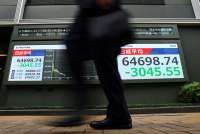
The Indonesian equity market is currently under clear pressure from persistent headwinds, including the MSCI overhang and related foreign outflows, which continue to weigh on broader market sentiment even as long-term investors assess direct opportunities.
Capital flows, at the end of the day, go where economic opportunities are. What differentiates Indonesia is the unique combination of demographic scale and significant natural resources that are essential to the global energy transition. As companies diversify supply chains and seek long-term growth opportunities, Indonesia can benefit from these trends. For example, compounded in the past three years, exports from Indonesia to North America, Central and South America, and the Middle East have continued to grow.
The government's downstream industrialization agenda is also helping move the economy further up the value chain. By encouraging greater domestic processing of natural resources and supporting the development of related manufacturing ecosystems, Indonesia is creating larger and more sophisticated investment opportunities that can attract both domestic and international capital.
We are supporting clients to capitalize on these opportunities in fast-growing industries. In critical minerals, we advised the localized downstream transformation of critical minerals vital to global electrification, completing our fourth consecutive mandate with Freeport Indonesia. And in Al, we acted as the debt adviser of Zankore - an Al infrastructure platform launched alongside Indosat Ooredoo Hutchison, NVIDIA, and Nokia.
KONTAN: Indonesia has announced plans to establish an International Financial Center. What would it take for the country to compete with established regional and global financial hubs?
Ernesto: Building an internationally competitive financial center is an ambitious goal, especially when navigating current market volatility and investor caution. While Indonesia's economic size and growth potential are strong starting points, becoming a true regional hub requires giving global investors the confidence that they can deploy and manage capital with ease.
Read Also: Indonesia's ST017 Retail Sukuk: Coupons Projected to Top SBR015 as Bond Yields Climb
Based on Citi's experience operating in major international financial centers around the world, three elements are particularly important. First, investors value predictability, including regulatory consistency, legal certainty, and transparent dispute-resolution frameworks, as these help build long-term confidence.
Second, liquidity is critical. That includes efficient capital mobility supported by deep foreign exchange markets and clear cross-border investment rules. Third, capability helps attract global financial activity. World-class financial and digital infrastructure, combined with a strong pipeline of skilled talent, is essential.
While Indonesia continues to advance in digital payments and financial innovation, closing the gap in capital market depth and reinforcing investor confidence are essential steps to transitioning from a domestic hub to an enduring gateway for global capital.
KONTAN: Citi has adopted AI within its operations. What impact has the use of AI had on the bank’s operational performance?
Ernesto: We're embedding Al into every part of how we run our businesses, while maintaining a strong focus on safety, compliance and responsible innovation. We have our internal Al tools being used in 87 countries and jurisdictions by nearly 180,000 colleagues. I think usage is going to keep increasing in a very significant way.
We've introduced Al-powered client solutions and specialized tools to address business specific needs. For example, our Service Operations teams use CitiService Agent Assist to deliver faster, more accurate responses to client inquiries. Al is also now embedded across Citi's wholesale credit underwriting operations in 41 countries, enabling processing volumes that are four times higher.
Citi Indonesia is among the first banks in the country to launch proprietary Al tools for all employees here. These tools are utilized to increase productivity.