/2026/03/05/1712311754.jpg)
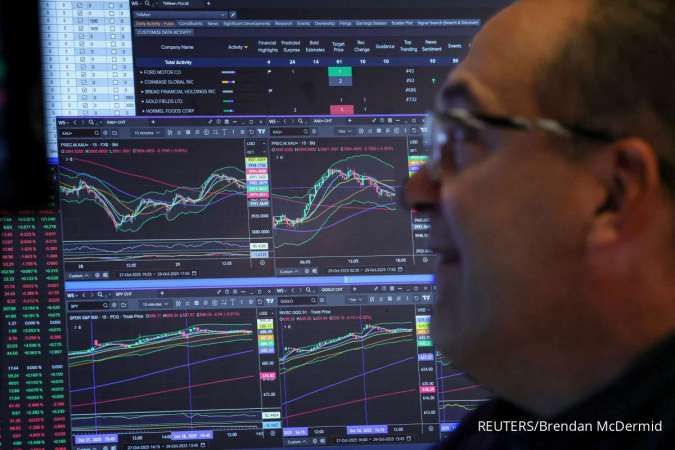
GLOBAL MARKET - NEW YORK, March 16 - Global stocks rallied on Monday as oil prices eased, though the surge in crude prices this month is likely to shift the inflation outlook and lead most central banks to hold rates steady at their policy meetings this week.
Israel said it has detailed plans for at least three more weeks of war as its military pounded sites across Iran overnight, while Iranian drone attacks temporarily shut Dubai airport and hit a key oil facility in the United Arab Emirates. U.S. President Donald Trump repeated his call for help to unblock the Strait of Hormuz after some vessels sailed through it.
Read Also: Stock Markets Cautious, Oil Gains on Hormuz Doubts; Traders Await Central Banks
In addition, Treasury Secretary Scott Bessent said the U.S. was "fine" with some Iranian, Indian and Chinese ships going through the strait for now, adding that any action to alleviate higher prices would depend on how long the war on Iran lasts.
U.S. crude settled down 5.28% to $93.50 a barrel and Brent fell to $100.21 per barrel, to settle down 2.84% on the day. Both Brent and U.S. crude have surged nearly 40% in March.
This jump in oil prices and its potential to boost inflation have led markets to recalibrate expectations for easing policies from global central banks this year. Markets are currently pricing in about 25 basis points of cuts from the U.S. Federal Reserve by the end of the year, and nearly 40 basis points of hikes from the European Central Bank, according to LSEG data.
On Wall Street, U.S. stocks closed higher, led by AI-linked names such as Nvidia and Meta Platforms. Meta shares ended he session up 1.8% after Reuters reported the social media giant plans to lay off 20% or more of its workforce while Nvidia gained 2.8% as CEO Jensen Huang began to detail the company's hardware and software plans at its annual developer conference.
Read Also: GLOBAL MARKETS-Asia Shares Wary, Oil Choppy on Hormuz Doubts
"There's things out there that are leading people to believe that we're going to be able to open and defend the Straits of Hormuz. I don't know that I'm buying that one, but that's what's causing the rally," said Stephen Massocca, senior vice president at Wedbush Securities in San Francisco.
"Uncertainty is going to remain and that's not good for markets. There's a lot of really cheap stocks out there that are getting cheaper. There's a lot of opportunity here, but you're going to need to be patient."
The Dow Jones Industrial Average the Dow Jones Industrial Average rose 387.94 points, or 0.83%, to 46,946.41, the S&P 500 gained 67.20 points, or 1.01%, to 6,699.39 and the Nasdaq Composite rallied 268.82 points, or 1.22%, to 22,374.18.
The Dow and S&P registered their biggest daily percentage gain since February 6. MSCI's gauge of stocks across the globe advanced 10.97 points, or 1.10%, to 1,010.13, and was on course for its biggest daily percentage gain since February 9.
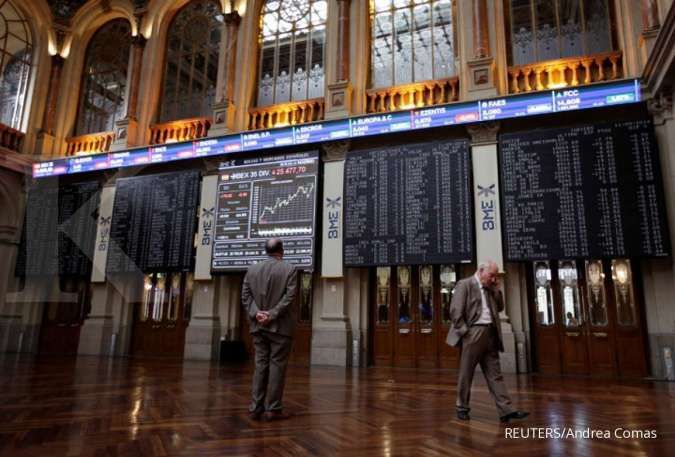
The pan-European STOXX 600 index closed up 0.44% to snap a three-session streak of declines. Commerzbank's shares shot up about 9% after Italy's UniCredit launched a bid for an additional stake in the German lender.
Read Also: GLOBAL MARKETS-Oil Prices Surge as Iran Escalates Tanker Attacks, Shares Fall
ALL THE CENTRAL BANKS
Central banks in the U.S., Britain, euro zone, Japan, Australia, Canada, Switzerland and Sweden will this week hold their first meetings since the start of the Iran war, and investors will look for clues on how rising crude prices could impact the interest-rate path.
The sharp shifts in central bank expectations have led to large moves in government bonds.
The yield on the benchmark U.S. 10-year notes dropped 6.1 basis points to 4.224%, though it is still up about 26 bps for March, as market participants scaled back the timing and magnitude for expected rate cuts.
Read Also: Indonesia 2025 Crude Palm Oil Output Up 7.3% to 51.7 Million Tons, Association Says
The U.S. Fed is largely expected to hold rates steady at its policy announcement on Wednesday, and policymakers are more likely to strike a cautious if not outright hawkish tone this week due to the current oil shock.
There have been sharper moves in rate-sensitive, shorter-dated yields, and two-year German yields have jumped 40 basis points this month, while the equivalent British gilt yield has surged 58 bps.
A cautiously steady outcome is expected from the other central bank meetings, excluding the Reserve Bank of Australia, which is seen likely to raise its cash rate a quarter point to 4.1%, as it battles resurgent inflation at home.
The heightened volatility in markets has tended to benefit the U.S. dollar as a safe haven. The United States is also a net energy exporter, giving it a relative advantage over Europe and much of Asia, which are net importers.
Read Also: Indonesia Parliament Approves New Officials to Steer Financial Regulator Reforms
But the dollar index, which measures the greenback against a basket of currencies, dropped 0.56% to 99.78, after touching a 10-month high â on Friday, with the euro up 0.81% at $1.1508.