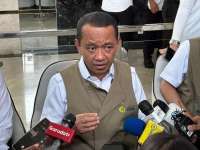
/2026/09/23/1486220549.jpg)
BANK INDONESIA / BI - JAKARTA, Sept 23 - Indonesia's central bank held interest rates steady on Wednesday at its first meeting sinceDestry Damayantiwas appointed governor earlier this month, in line with market expectations, as she highlighted the need to maintain economic growth momentum.
Bank Indonesia kept the benchmark 7-day reverse repurchase rate steady at 5.75%, as predicted by 29 of 32 economists polled by Reuters. Its overnight deposit facility rate and lending facility rate were also left unchanged.
"We want to support economic growth because the momentum is there," Destry said in BI's first in-person press conference in a year and a half following its monthly policy review.
Read Also: GLOBAL MARKETS-Asia Stocks Ride Tech Wave Higher, Oil Stays Subdued
"While stability remains our focus now, we must also open room for the economy to move faster."
BI raised rates by 100 basis points in three moves in May and June to defend the rupiah as it fell to record lows against the dollar. These rate hikes were "sufficient" to respond to global uncertainty, she said.
BI kept its economic growth forecast for 2026 at a range of 4.9% to 5.7%. It recently slightly raised its 2027 growth outlook range to 5.2% to 6%.
RUPIAH UNDER PRESSURE
Destry also announced bigger discounts on hedging costs for foreign investors who buy rupiah-denominated assets, in what she called "innovative" policy, in a bid to attract capital inflows and defend the rupiah.
The policy mix remained consistent with BI's efforts to stabilise the rupiah, maintain inflation within target and support growth, the governor said.
Read Also: GLOBAL MARKETS-Nasdaq Sets Record High, Oil Dips on Improved Crude Flows
Parliament approved Destry as governor in September, making her the first woman to lead BI. She was interim chief at the last policy meeting in August, when rates were held steady, after the surprise resignation of Governor Perry Warjiyo in late July.
Warjiyo's departure had added to investors' growing concerns about political interference at BI after President Prabowo Subianto appointed his nephew to a senior role at the central bank and parliament expanded its mandate to support economic growth, though Destry's appointment was welcomed.
Worries about fiscal spending and transparency issues with the stock exchange have triggered capital outflows, while Indonesian assets have also been hit by risk aversion among investors related to the war in the Middle East and rising interest rates in major economies.
The rupiah has recovered some ground since June, but has weakened again in recent weeks on investor worries about the fiscal outlook as oil prices rise. The currency on Wednesday was trading around 0.34% stronger than the previous day's close.
"In my view, the decision to maintain the BI rate is appropriate. Not all rupiah pressure should be paid for with more expensive interest rates for the entire economy," said Fakhrul Fulvian, an economist with Trimegah Securities.
Read Also: ShinyHunters Hackers Say They Breached FBI, Stole Data on Bureau Employees
Expecting more rate hikes in the United States, Faisal Rachman, a Bank Permata economist, predicted BI would hike by another 25 bps in the fourth quarter.
Barclays economist Brian Tan maintained his outlook for BI rates to remain unchanged through 2026 and 2027, as long as pressures on rupiah do not pick up.
The annual inflation rate picked up to 3.19% in August but stayed within BI's 1.5% to 3.5% target range, which BI said reflected some of the pressure on the rupiah. Government fuel subsidies have helped to steady prices, analysts said.