IDX COMPOSITE (IHSG) - Indonesia Stocks Brace for MSCI's November Review: IHSG Outlook, Scenarios and What to Watch
Key takeaways
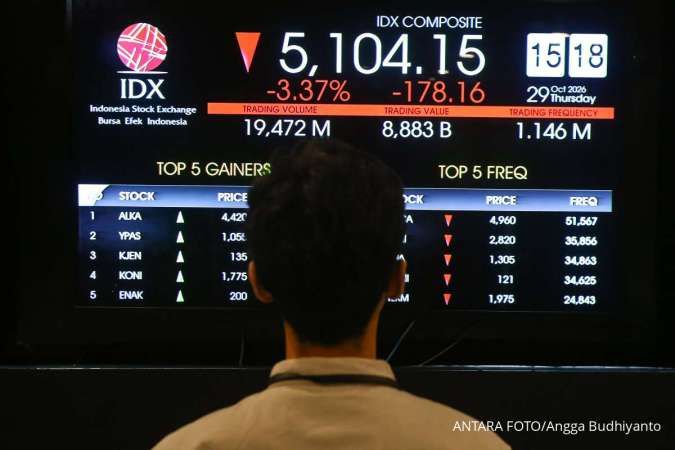
- The Jakarta Composite Index (IHSG) closed at 5,050 on Friday, November 6 - down 41.59% year to date - with Rp 127.26 trillion in foreign outflows from the regular market in 2026.
- MSCI announces its November index review on November 11, 2026 (US time) - but the final call on Indonesia's downgrade from Emerging to Standalone Market only comes by June 2027 at the latest.
- Analysts map year-end IHSG scenarios of 4,300-5,400 and urge risk-first positioning, with banking, commodities and defensive stocks in focus.
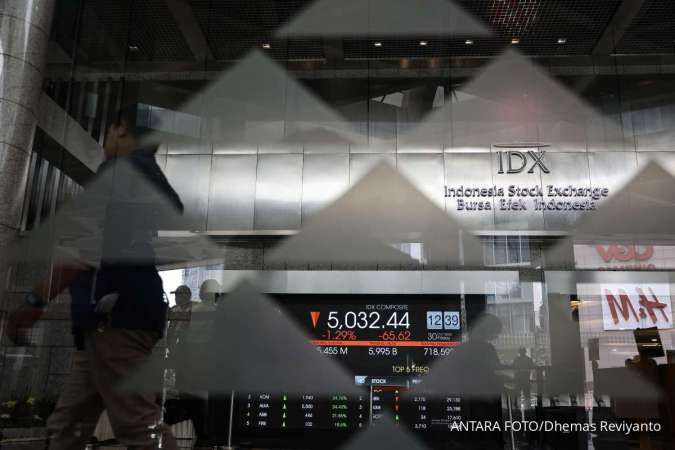
JAKARTA - Pressure on Indonesian equities is expected to persist into this week's MSCI index review, with investors cautious about index composition changes and free-float adjustments - even though November 11 is not the final verdict on the country's emerging-market status.
Read Also: Bayan's Low Tuck Kwong Speaks Out on 30.25% BYAN Stake Sale
Why the MSCI review matters - and what it is not
MSCI will release the results of its November 2026 index review on November 11, US time. Rully Arya Wisnubroto, head of research and chief economist at Mirae Asset Sekuritas, was quick to draw a distinction: this review is not the final decision on reclassifying Indonesia from Emerging Market to Standalone Market.
"That decision will only be announced no later than June 2027," he told Kontan on Sunday, November 8, 2026.
It still matters, though: the result offers a read on how MSCI assesses the quality of Indonesia's capital-market reform implementation. Reuters has also cited UBS estimates of potential outflows of around US$4 billion from passive funds and US$15 billion from active funds if the downgrade materializes.
In his view, the biggest impact is not just index weight adjustments but a rising risk perception toward the Indonesian market - an uncertainty set to shadow the IHSG for months. Still, he views the steps taken by the Financial Services Authority (OJK) and the Indonesia Stock Exchange (IDX) as positive developments.
"What investors will watch going forward is consistency of implementation, beneficial-ownership transparency, free-float credibility, and rule enforcement that shows real evidence of improving market quality," he said.
Read Also: Danantara Sumberdaya to be Redefined as Export Intermediary Body in Revised Rules
The numbers behind the sell-off
As of Friday, November 6, the IHSG closed at 5,050, down 41.59% year to date, while foreign investors had pulled Rp 127.26 trillion from the regular market since the start of 2026.
Capital-market observer Edwin Sebayang traces the pressure to a trust crisis in capital-market governance, MSCI reclassification risk, rupiah weakness and a rising risk premium. Into this week's announcement, he sees the risk of further weakness outweighing the chance of a rebound over the next two to three days.
"That said, it doesn't mean the IHSG is certain to fall sharply," he told Kontan on Saturday, November 7, 2026.
Year-end scenarios: 4,300 to 5,40
Edwin maps three paths for the index into year-end, hinging on sentiment and selling pressure:
| Scenario | IHSG level by end-2026 | Key driver |
|---|---|---|
| Bullish | 5,100-5,400 | Rebound and improved market sentiment |
| Base case | 4,700-5,100 | Consolidation with high volatility |
| Bearish | 4,300-4,700 | Continued selling pressure |
Read Also: Taipei, Seoul Reel Under Chipmaker Rout as AI Frenzy Unwinds
How investors should position
Rully advises retail investors to prioritize risk management over calling the market bottom. Short-term traders should cut transaction frequency, limit position sizes and avoid excessive leverage. Medium- and long-term investors can start eyeing fundamentally strong stocks that have seen deep valuation corrections - buying gradually, not all at once.
"Don't use falling prices alone as the reason to buy. Earnings prospects, balance-sheet quality, trading liquidity and exposure to MSCI risk must remain the main considerations," he said.
Edwin likewise urged retail investors to keep their investment horizon and risk tolerance in view, noting that the decline could also create opportunities: "Investors must be able to tell stocks that are genuinely cheap on fundamentals apart from those that merely look cheap because they carry the risk of further valuation declines."
Read Also: Indonesia Q3 GDP Growth at 5.47%, Beats Expectations
Sectors to watch
Rully's watchlist centers on banking - deep price corrections have made the valuations of several large banks more attractive, though the sector remains vulnerable to foreign selling in the short run given its liquidity and heavy global weights - plus commodities and relatively defensive names.
Edwin's list is similar: banking, gold, telecommunications, energy and coal, and consumer stocks. The macro forces steering the index from here, he says, include domestic conditions, fiscal spending, Bank Indonesia policy and banking liquidity, foreign reserves and the trade surplus, and global commodity prices.
The bottom line
Expect defensive trading around the November 11 announcement. The review is a sentiment gauge - a read on how MSCI views Indonesia's reform progress - not the final call; the real decision on the country's index classification is due by June 2027 at the latest. Until then, the uncertainty premium on Indonesian equities is unlikely to disappear.
--------------------------------------------------------------------------------
Source and attribution
This article is an English-language adaptation of reporting originally published in Indonesian by Kontan.co.id: "Simak Prospek IHSG Jelang Review MSCI November 2026" (https://investasi.kontan.co.id/news/simak-prospek-ihsg-jelang-review-msci-november-2026), published November 8, 2026 (3:00 p.m. WIB), reported by Pulina Nityakanti and edited by Ignatia Maria Sri Sayekti. All figures and quotes are drawn from the original article; quotes were translated from Indonesian.
Disclaimer
This article is for information only and does not constitute investment advice. Index projections and scenario ranges are analyst estimates, not guarantees; markets can move beyond any of the scenarios described. Always verify with official exchange and regulator disclosures and consult a licensed financial advisor before making any investment decision.