/2025/11/19/931037234.jpg)
AUSTRALIA - JAKARTA. Indonesia and Australia are currently experiencing the pinnacle of their historical relationship. Amid the strengthening of strategic cooperation, defence, and economy, both countries are leveraging this momentum to propel more concrete business and investment collaborations. The intensifying intergovernmental dialogues are opening broader opportunities for business entities in both countries to explore long-term prospects.
This momentum is reflected in the visit of the Australian business delegation to Jakarta in early February 2026. This mission is not merely a market introduction visit, but a continuation of systematic efforts to deepen Australian investment in Indonesia, in line with the enormous potential of national economic growth and the structural transformation agenda currently being implemented by the government.
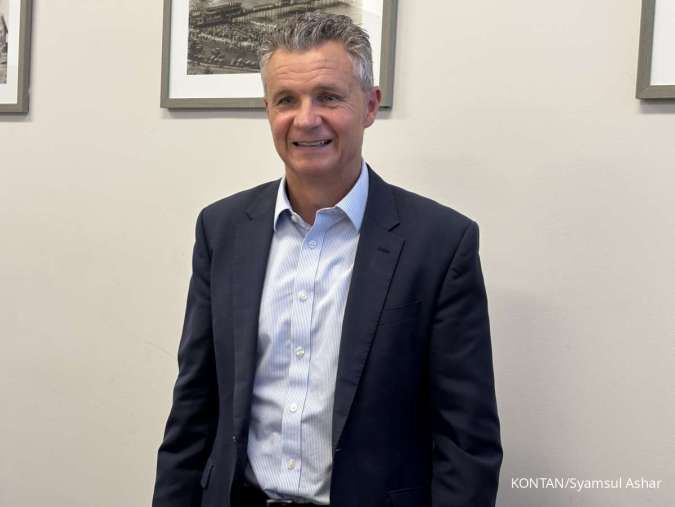
In an exclusive interview with The New York Times in Jakarta, Tuesday (4/2/2026), Peter McGregor, National Treasurer of the Australia Indonesia Business Council (AIBC), affirmed that Australian investors' perception of Indonesia has undergone a significant shift. From merely understanding the potential, investors are now beginning to see a tangible path towards investment realization, especially in the supporting infrastructure, energy, and environmental management sectors.
McGregor believes that the increasingly solid foundation of bilateral relations is a key factor in boosting investor confidence. The role of both governments is considered successful in creating a strong cooperation platform, while business entities are now challenged to translate these opportunities into sustainable business and investment partnerships.
Here are excerpts from his interview:
Q: What is the main context of Australia's business mission to Indonesia this year?
Peter McGregor: This mission is a continuation of the roadmap outlined in the Nicholas Moore Report in 2023. The report describes four stages to deepen Australian investment in Indonesia.
The first stage is to increase awareness, which was the focus of last year's mission—understanding Indonesia's economy and its business environment. This year, we are moving to the next stage, which is to eliminate barriers and build capabilities. The focus is much more granular: specific opportunities, certain sectors, organizations, and potential partners. All of this is directed towards the fourth stage, which is deepening investment in the medium to long term.
Q: How large is the scale of the delegation and the interest of investors involved in this mission?
Peter McGregor: We brought 29 delegates from 20 different organizations. Included are companies that have long operated in Indonesia, as well as institutional investors, especially pension funds.
Collectively, these investors manage assets of about AUD 1.6 trillion, or nearly USD 1 trillion. During the mission, we met with Danantara, Astra, several ministries such as the Ministry of Finance, Infrastructure, and Transportation, and attended the Indonesia Economic Summit.
Q: How does the perception of investors differ compared to last year's mission?
Peter McGregor: The change is very noticeable. Last year, many participants said they were just realizing the enormity of Indonesia's potential. This year, the narrative has changed. Investors are beginning to see concrete opportunities, clearer paths, and potential partners for collaboration.
The next challenge is to maintain momentum post-mission. That's our job at AIBC along with Austrade, DFAT, EFA, and deal teams to ensure this dialogue continues and results in investment realization.
Q: Amid global financial market turmoil, is investor sentiment towards Indonesia affected?
Peter McGregor: Our perception is quite the opposite. Market fluctuations are short-term. There is no view that this turmoil changes Indonesia's long-term potential. Indonesia's fundamentals and structural opportunities remain strong in the eyes of investors.
Q: What is the investor's view of Danantara, which is now one year old?
Peter McGregor: Last year, Danantara was just a concept. Now, its structure is clear. We see the potential for Danantara to become a transformative institution, similar to the role of Temasek in Singapore.
Indeed, 12 months is still very early. But now there is a better understanding of Danantara's structure, objectives, and direction. This forms an important foundation for future dialogue and collaboration.
Watch: Prabowo's Joke to Australian PM: Your Intelligence is Very Good, You Know I Like Bagpipe
Q: President Prabowo's administration emphasizes strengthening human capital. Does this reduce infrastructure investment opportunities?
Peter McGregor: On the contrary. Social programs such as nutrition, health, education, and energy resilience require large supporting infrastructure.
Investors do not invest directly in social programs. But they are very interested in the commercial elements that support these programs—supply chains, logistics, distribution, energy, and other basic services. That's where the investment opportunities lie.
Q: Can you explain in more detail the opportunities in the waste management sector?
Peter McGregor: Waste management in Indonesia is no longer just a problem, but has become a crisis. We discussed with Astra, which expressed interest in expanding its infrastructure focus to water sanitation and waste management.
However, this sector still requires refinement in terms of regulation, tariffs, and economic structure to be truly investable. This is clearly a medium to long-term opportunity, but the interest of investors is real.
Q: How do Australian investors view the rather drastic regulatory changes in Indonesia?
Peter McGregor: Stability, consistency, and transparency of regulation are key for investors. There are many inputs from AIBC members that we will convey in the five-year review process, IA-CEPA.
The barriers to Indonesia-Australia investment are not tariffs or financial, but non-tariff issues such as licensing, taxation, and regulatory certainty. This is not a problem, but an opportunity to be improved through government and business dialogues.
Q: Is there already a concrete agreement with Danantara?
Peter McGregor: There is no agreement yet. But this meeting is very important because it brings investors together with two functions of Danantara: Asset Management and Investment Management.
Companies are more interested in optimizing SOEs in the portfolio, while pension funds focus on co-investment opportunities. Our goal is not to return with contracts, but to build relationships, understand opportunities, and open long-term dialogues.
Q: What is the main conclusion from the Australian business mission in Jakarta this time?
Peter McGregor: The intergovernmental relationship between Australia and Indonesia is currently at its strongest point in history. The platform has been established. Now, it's the business community's turn to take advantage of it and translate potential into real investment.