/2024/09/23/1873888243.jpg)
LAW & COURT - JAKARTA. Indonesian authorities on Thursday named a director of a scrap metal company as a suspect in a probe into radioactive contamination at a big industrial zone, accusing the firm of violating environmental laws on storage and disposal.
The caesium 137 contamination was first detected in a batch of shrimp shipped to the United States in August by a local company also based in the Modern Cikande Industrial Estate, about 68 km (42 miles) from the capital Jakarta, after which Indonesia began sweeping scans there.
Read Also: Dollar Down for Tenth Straight Day, Yen at 2-1/2 Week High
Indonesia's government has repeatedly said PT Peter Metal Technology (PT PMT), a factory owned by foreign investors that ceased operations in July, was the epicentre of the radioactive contamination.
On Thursday, police said PT PMT's director Lin Jingzhang, a Chinese national, was a suspect in the spread of the contamination. Lin has not been charged and is assisting with the investigation, but is barred from leaving Indonesia, police said.
"He was not detained because, as we have seen, he is cooperative," said Sardo Sibarani, an official with the National Police's Criminal Investigation Agency.
Reuters was not able to reach Lin for comment and PT PMT did not immediately respond to messages sent to a cellphone number listed in the company registry of Indonesia's law ministry.
Read Also: BRI-MI Prepares Indonesia’s First Gold ETF as Investor Demand for Gold Rises
Caesium-137 enters the environment as a result of past nuclear tests or accidents like Chernobyl and Fukushima, but it is also used in some industrial applications like oil well logging. Indonesia has no nuclear weapons or nuclear power plants.
The task force investigating the contamination said that PT PMT's scrap metal was sourced domestically, while all stainless steel produced by PT PMT was exported to China.
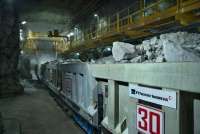
Investigators suspect hazardous and toxic waste found at a scrapyard on the estate came from PT PMT, which set up at the estate two years ago and operated a facility for non-ferrous base metal manufacturing and grinding.
"The purchase of scrap materials mixed with used industrial equipment contained Caesium 137, which was processed legally or illegally without proper storage and supervision and disposal of materials in accordance with applicable regulations," said Bara Hasibuan, spokesperson for the task force.