/2026/08/12/2106780513.jpg)
GLOBAL MARKET - SYDNEY. Treasury yields hit multi-year highs and Asian shares slumped on Friday as soaring oil prices inflamed inflation risks, sending investors scrambling to price in more policy tightening from central banks across the globe.
Brent crude hit a four-month high of $109.97 a barrel on Friday after a 6% overnight jump, but it soon ran into selling pressure and was last down 0.6% at $107. It was still set for a weekly rise of 11%.
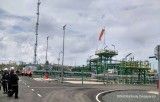
Oil flows remained restricted through the Strait of Hormuz as the U.S. and Iran traded attacks, while Iran-aligned Houthis seized control of Yemen's port of Mocha, threatening Saudi oil exports in the Red Sea.
"Maritime traffic through the Bab el-Mandeb is gravely imperiled by the Houthi advances," said Helima Croft, head of global commodity strategy at RBC Capital Markets, tipping Brent could hit $121.99 a barrel later this year due to the resumption of a full-blown Saudi-Houthi war.
Read Also: GLOBAL MARKETS-Wall Street Dips as $100 Oil, Inflation Worries Weigh on Investors
That was a wake-up call for markets that are finally starting to price in the risk of a protracted war.
Comments from President Donald Trump that the war could last beyond the November midterm elections haven't helped, with bond yields surging globally on heightened inflation fears.
The benchmark 10-year Treasury yield climbed as much as 3 basis points on Friday to 4.9790%, its highest in three years and just shy of the closely watched 5% level, raising financial costs for the $40 trillion U.S. government debt.
The 30-year yield scaled another 19-year top of 5.3836%, lifting U.S. mortgage rates and hamstringing the housing market.
Two-year yields also hit a new 14-month peak of 4.5961% after surging 12 bps overnight as markets ramped up bets that the U.S. Federal Reserve will have to raise interest rates this month to tame inflation, currently priced at about 70% probability.
The rout in the U.S. bond market was partly due to a Treasury buyback programme that fell short of the expected $6 billion value.
Asian bonds extended the global selloff, with Australia's three-year government bond yields surging 14 bps to a 15-year high of 5.01%.
Japan's 10-year government bond yields rose 8 bps to 2.98% as data showed Japan's wholesale inflation stayed elevated to bolster the case for an imminent rate hike from the Bank of Japan.
Read Also: GLOBAL MARKETS-Oil Tops $100, European Stocks Drop on Fresh Gulf Attacks
The surge in oil prices has raised the stakes for U.S. consumer price data for August due later in the day, which could make or break the case for a Fed rate hike next week.
Forecasts are centred on a 0.2% monthly rise in the core measure of CPI, although risks are skewed towards a higher number as the PPI data overnight showed some stickiness.
RATE HIKES COMING
Analysts at JPMorgan now expect eight of the nine developed-market central banks to hike interest rates by the year end, including the Fed, BOJ, all four central banks in Europe, and the reserve banks of Australia and New Zealand.
"The tightening is for now expected to remain shallow, but risks to our forecasts lean in the direction of more action in the face of resilient growth, sticky core inflation, and commodity price pressures," they said in a note.
The European Central Bank raised interest rates overnight for a second time this year and some officials see more tightening ahead with October in play.
Higher bond yields raised the discount rates used for corporate valuations, leaving Asian stocks in deep losses.
Read Also: Indonesian Wildfire Emissions Surge to World's Highest, Data Shows
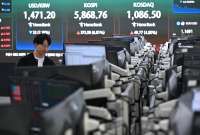
MSCI's broadest index of Asia-Pacific shares outside Japan lost 1.5% while Japan's Nikkei tumbled 2.2%. Chinese blue-chips fell 0.8% and Hong Kong's Hang Seng dropped 0.6%.
European bourses are set for a calmer open, with pan-region stock futures flat as yields there already hit multi-decade highs overnight. Nasdaq futures were little changed and S&P 500 futures bounced 0.2%.
The U.S. dollar lifted with higher Treasury yields, having gained 0.4% overnight against its major peers. It was last steady on Friday at 99.04.
In commodity markets, gold rose 0.4% to $4,334 an ounce after dropping nearly 2% overnight, failing to catch some of the safe-haven bids.